
In the heart of our childhood memories, there exists a vibrant mosaic of joy, laughter, and the echoes of traditional games played on the streets of India. As we navigate the digital age, let’s embark on a journey back to the days when the sunlit lanes became our playgrounds, and the games of Gilli Danda, Pithoo, Kanche, Langdi Taang, Kho Kho, Stapu, Chain-Chain, Chor-Police, and more, etched moments of pure bliss into our hearts.
Gilli Danda: A Symphony of Skill and Camaraderie
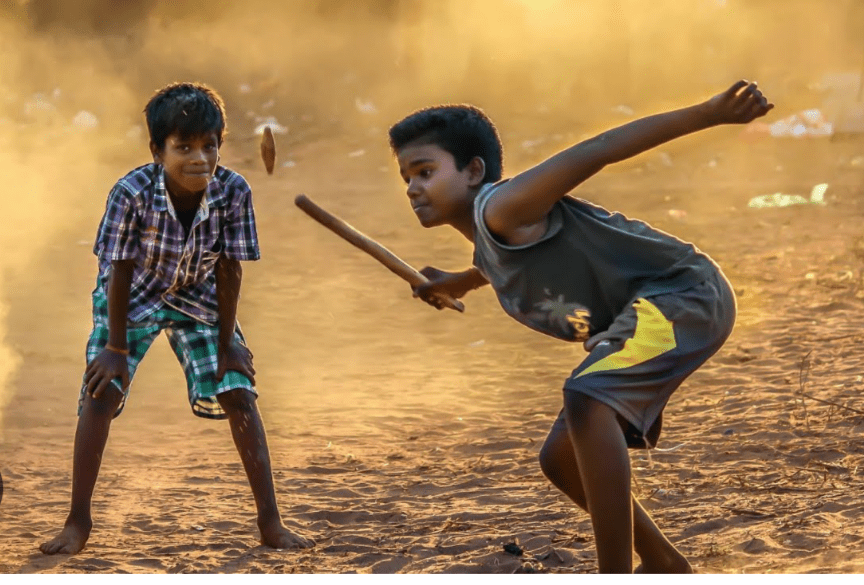
Picture this: a small stick (gilli) expertly struck with a larger one (danda), creating a dance of skill and coordination. Gilli Danda was more than a game; it was a test of precision and the unspoken bond of friendship. The simplicity of the equipment turned ordinary streets into lively arenas, filled with the infectious energy of children immersed in the art of hitting and fielding.
Pithoo: Where Agility Meets Strategy
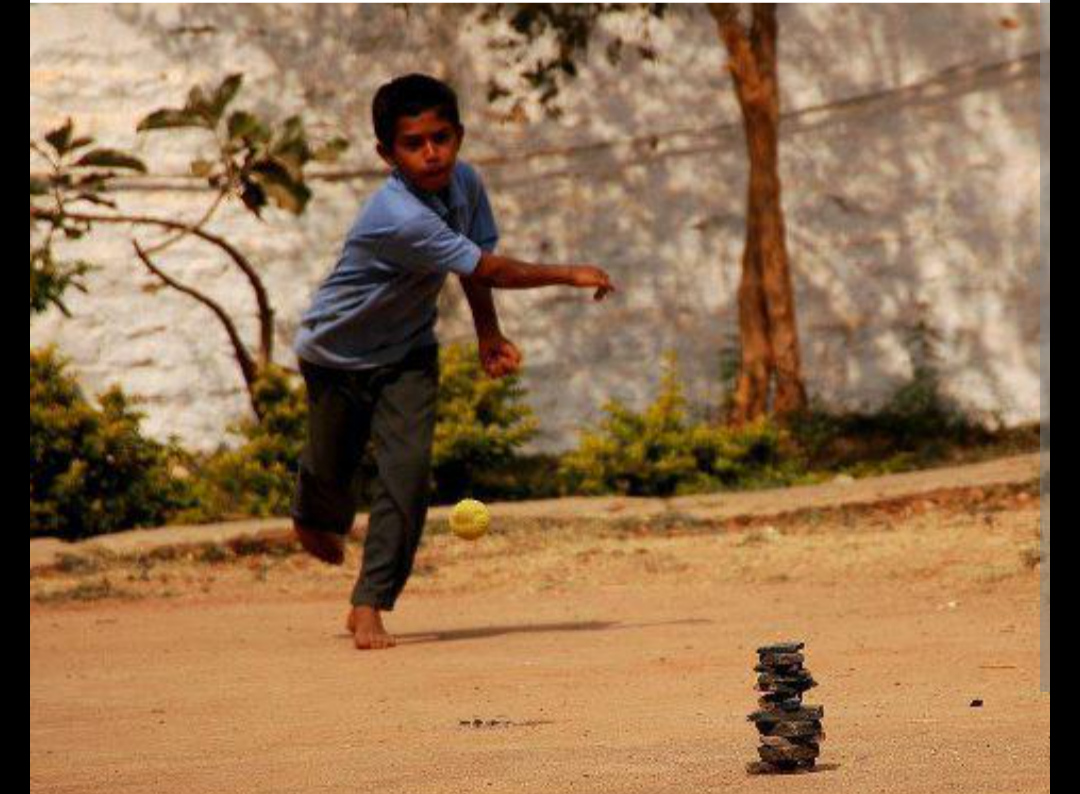
In the world of Pithoo, or Pithu, knocking down a pile of stones was not just about physical agility; it was a strategic dance where teamwork and cunning played pivotal roles. The thrill of a successful defense and the satisfaction of rebuilding the stack after a strategic triumph made Pithoo a game that embodied the spirit of childhood joy.
Langdi Taang: Hopping Through Boundless Joy

In the spirited game of Langdi Taang, one-legged hopping became a symbol of unfettered joy. Enclosed within a square boundary, children hopped, tagged, and reveled in the simple pleasure of movement and play.
Kanche (Marbles): A World of Precision and Calculation
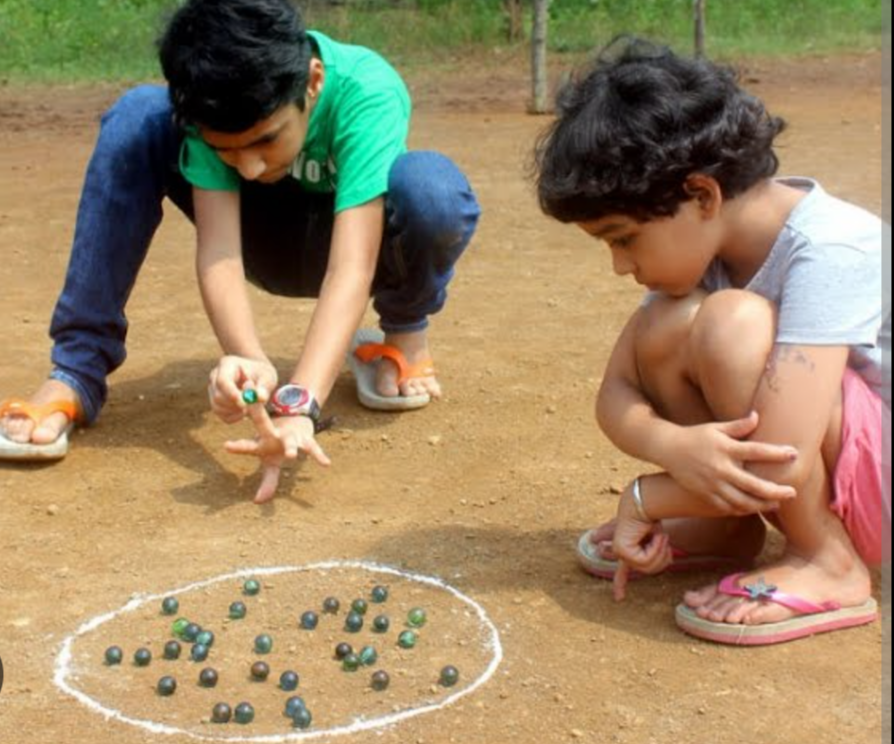
Kanche, or marbles, transformed the streets into a battleground of precision and calculation. Players strategically aimed to knock down opponents’ marbles, the distinct sound of glass colliding creating a symphony of childhood delight. The tangible thrill of winning marbles from friends remains an indelible memory.
Kho Kho: Chasing Dreams on the Playground
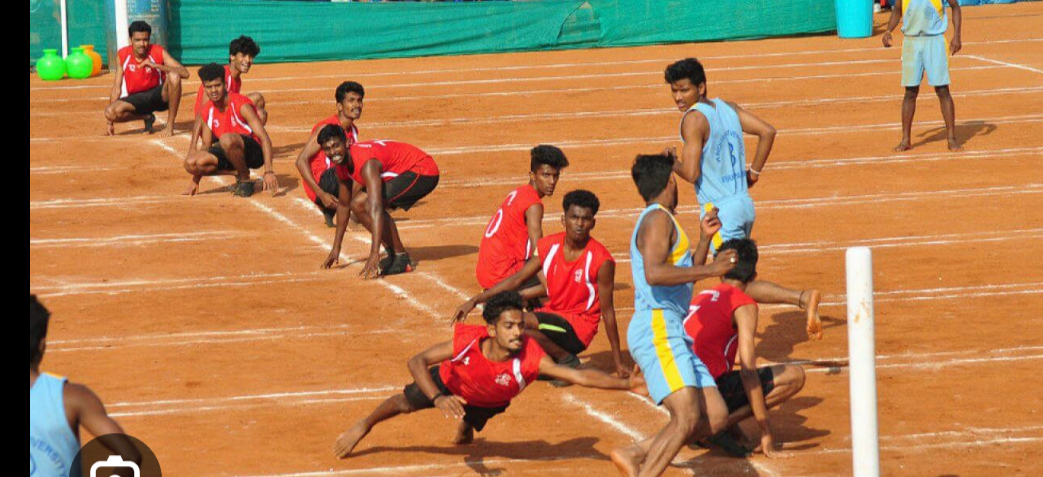
Enter the world of Kho Kho, a game that blurred the lines between pursuit and evasion. Two teams, each taking turns as chasers and defenders, sprinted across a rectangular field, weaving through agile maneuvers to tag opponents. The rhythmic chants of “Kho Kho!” filled the air as the game unfolded, creating a sense of unity and shared excitement.

Stapu (Hopscotch): Marking Territory, Creating Memories
Stapu, with its numbered squares and a rubber ball, transported us to a world of strategy and precision. Players aimed to conquer specific squares, marking their territory, and defending it against opponents armed with the bouncing ball. Each successful conquest brought a surge of triumph, turning simple squares into cherished landmarks of childhood conquests.
Chain-Chain: Hand in Hand, Linking Hearts
In the game of Chain-Chain, hands clasped, forming a human chain, as one player attempted to break through while the others resisted. The game embodied unity and cooperation, creating a literal and metaphorical connection among friends, symbolized by linked hands.
Chor-Police: A Dance of Pursuit and Evasion
Chor-Police, or Thief-Police, unfolded like a dance of pursuit and evasion. One group played the role of “thieves,” while the others assumed the mantle of “police.” The streets transformed into a playground of strategy, where teams alternated between chasing and evading, adding a thrilling narrative to our childhood adventures.
My Final Thought
As we wander down the lanes of nostalgia, the vibrant memories of Gilli Danda, Pithoo, Langdi Taang, Kanche, Kho Kho, Stapu, Chain-Chain, Chor-Police, and more illuminate the landscape of our childhood. These games, played with simple equipment yet rich in joy, are not just a part of our past—they are a living, breathing connection to the essence of growing up in India.
Let us embrace the timelessness of these games and share them with the generations that follow. For in the simplicity of a stick and a ball, or the hopping of a single leg, we discover the true magic of childhood play—a magic that transcends time, bridging generations through the shared joy of traditional Indian games.

 Light Hearted
Leave a comment