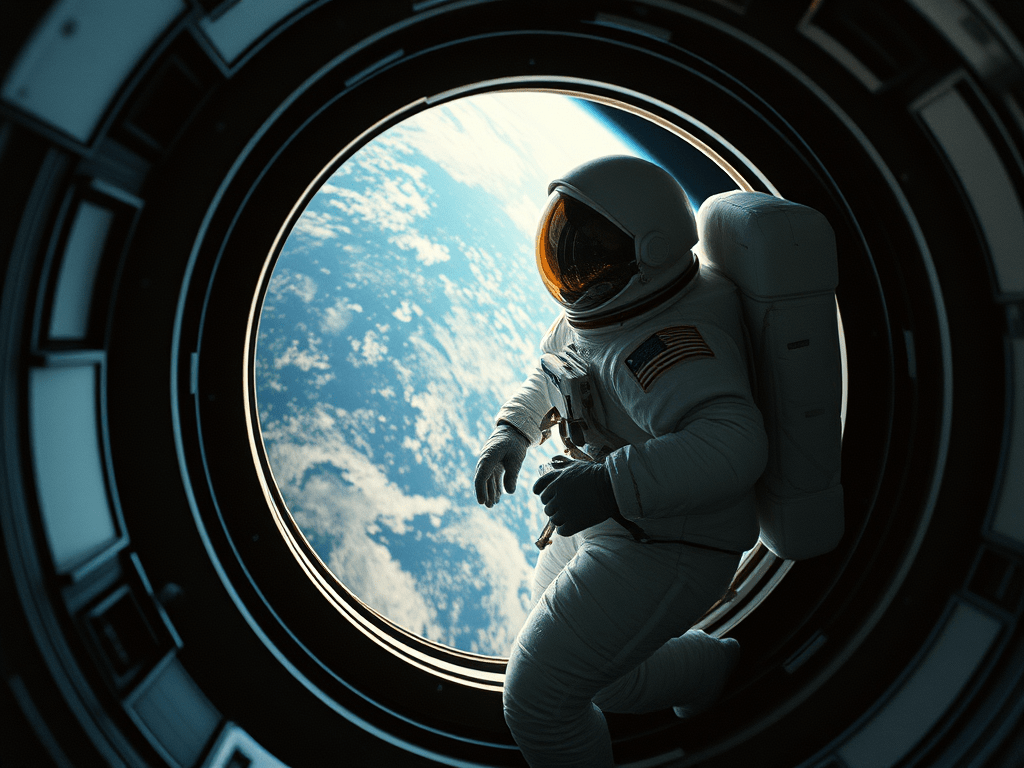
Get ready to strap in, folks, because we’re about to take a trip to the stars (or at least 435 miles above Earth)! In a groundbreaking move that’s got everyone from rocket scientists to armchair astronomers buzzing, the Polaris Dawn mission launched on September 10, 2024, marking a major milestone for private space travel. Think of it as the ultimate upgrade from your daily commute.
A Brief History of Spacewalks (and Why They’re Basically the Coolest Thing Ever)
Before Polaris Dawn, spacewalks were the exclusive domain of astronauts with NASA-approved haircuts and an intense fear of heights. The first spacewalk was a daring feat by Soviet cosmonaut Alexei Leonov in 1965, who basically took a cosmic stroll outside his spacecraft and said, “Hold my beer, Earth.” Since then, astronauts have been floating around outside their spaceships like cosmic superheroes, performing all sorts of tasks like repairing satellites and installing new modules (all while looking effortlessly cool).
The Polaris Dawn Mission: Not Your Average Space Trip
Now, imagine a group of regular folks (well, as regular as billionaires can get) swapping their morning coffee for a rocket launch. That’s exactly what happened with the Polaris Dawn crew, led by Jared Isaacman, the founder of Shift Payments. Joining him on this interstellar adventure were Sarah Gillis, a former Air Force pilot and engineer; Scott Poteet, a former US Army combat engineer; and Anna Menon, a former SpaceX engineer. Talk about a diverse team that could probably solve any problem, from a rogue alien invasion to a misplaced remote control.
The Historic Spacewalk: A Cosmic Selfie (and a Giant Leap for Mankind)
The real showstopper of the Polaris Dawn mission was the groundbreaking spacewalk conducted by Jared Isaacman and Sarah Gillis. Imagine stepping outside your spaceship and floating weightlessly in the vastness of space, with Earth staring back at you like a giant blue marble. It’s basically the ultimate cosmic selfie.
During their spacewalk, Isaacman and Gillis became the first-ever private citizens to venture outside the International Space Station (ISS). They successfully completed several tasks, including testing new technologies for future space missions. Think of it as a cosmic field trip with a side of science.
The Future of Space Travel: It’s Looking Out of This World
If Polaris Dawn has shown us anything, it’s that space travel is no longer just for astronauts with buzz cuts and government badges. It’s for anyone bold (or rich) enough to trade their 9-to-5 for zero gravity. This mission isn’t just a milestone; it’s proof that humanity is gearing up for the next giant leap into the cosmos. And who knows? Maybe space tourism will be as easy as booking a weekend trip to Mars—or at least the ISS.
So, whether you’re dreaming of interstellar vacations, moon selfies, or just an out-of-this-world adventure, the future of space travel is looking brighter than ever.


 Light Hearted
Leave a reply to satyam rastogi Cancel reply